


Mulberry trees are among the most fascinating and versatile fruit trees in the world. Known for their delicious mulberry fruit, fast growth, and historical importance in silk production, these trees have been cultivated for centuries. Today, mulberries are appreciated both for their nutritional value and their beauty in gardens and orchards. In this blog, we explore what mulberry trees are, what mulberry fruit tastes like, the most common mulberry species, and how mulberry tree planting works. Whether you are interested in growing a mulberry fruit tree or simply learning more about mulberries fruit, this blog answers all the most common questions about mulberries and mulberry trees.
What is a mulberry?
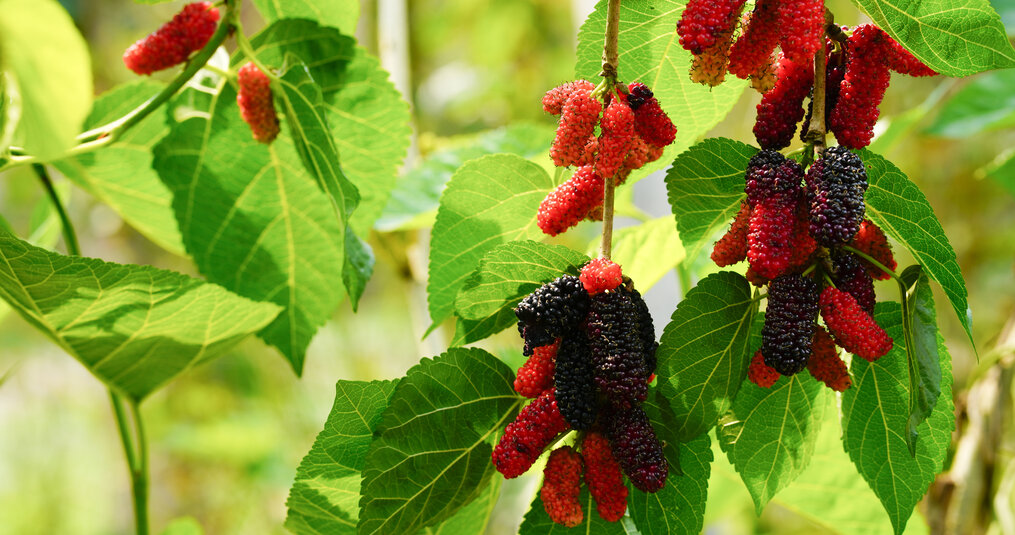
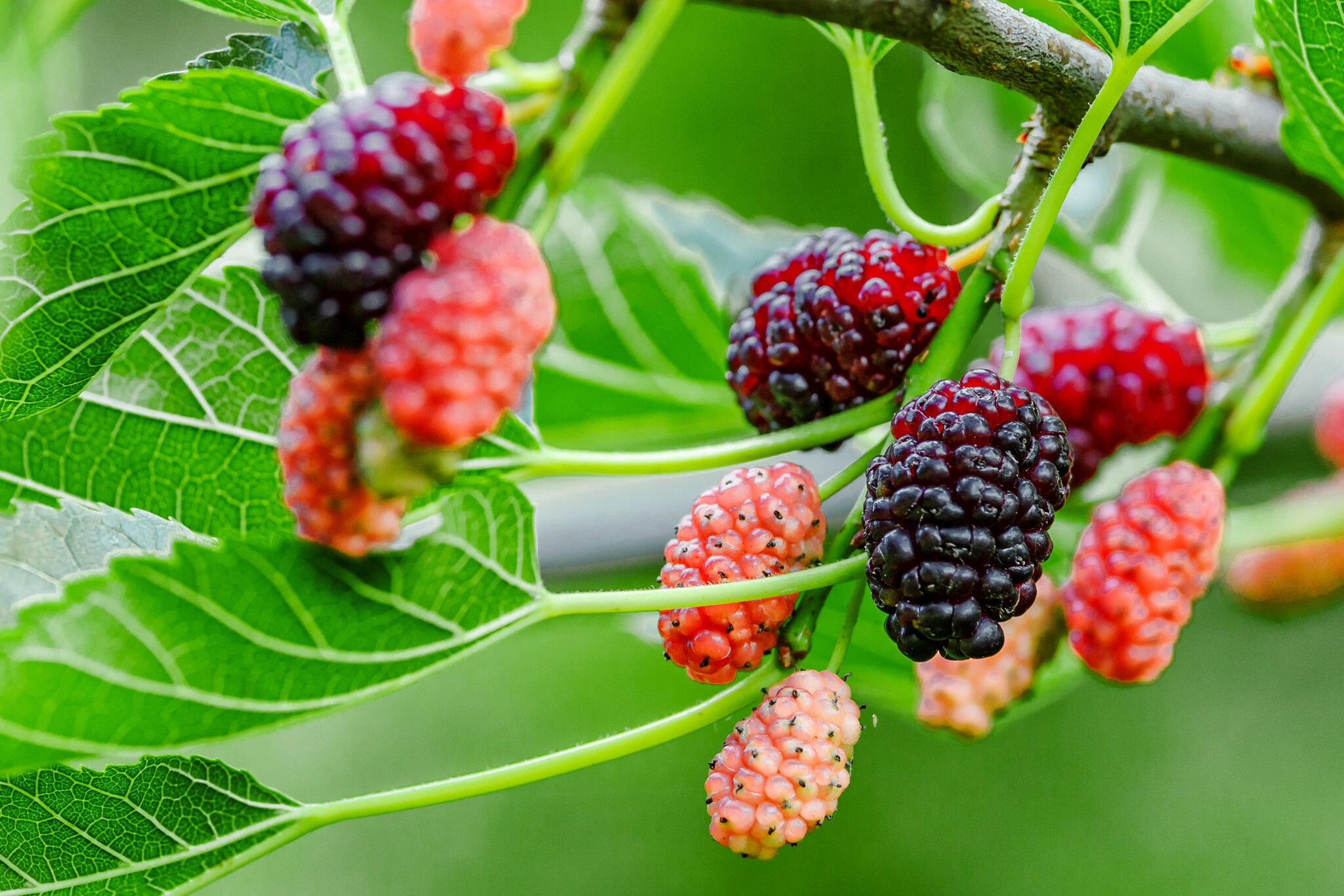
A mulberry is the fruit produced by trees belonging to the genus Morus. These deciduous trees are native to parts of Asia, Europe, Africa, and North America, and they have been cultivated for thousands of years. Mulberries fruit grow in clusters and resemble elongated berries. When ripe, they can be deep purple, red, or white depending on the variety. Their flavor is sweet, slightly tart, and often compared to blackberries. The term mulberries refers both to the fruit itself and to the trees that produce them. Mulberries are enjoyed fresh, dried, or used in jams, desserts, teas, and even wines.
What do mulberry trees look like?
A common question people ask is: what does a mulberry tree look like? Mulberry trees are medium-sized deciduous trees that typically grow between 10 and 20 meters tall. They have broad, rounded canopies and large, heart-shaped leaves with serrated edges. The leaves can vary in shape even on the same tree, sometimes appearing lobed or smooth. In spring, mulberry trees produce small, inconspicuous flowers. These flowers eventually develop into the familiar mulberries fruit, which ripen in late spring or early summer. The bark of a mulberry fruit tree is usually greyish-brown and becomes rough and furrowed as the tree ages. When fully grown, mulberry trees provide dense shade and a generous harvest of fruit.
The most common mulberry species
There are several recognized mulberry species, but three are the most widely cultivated:
White mulberry (Morus alba)
White mulberries are originally from China and were historically planted for silkworm farming. These trees grow quickly and adapt well to different climates. Their fruit can range from white to pink or even dark purple.
Black mulberry (Morus nigra)
The black mulberry produces some of the most flavorful mulberries fruit. The berries are dark purple to almost black and have a rich, sweet flavor. These trees grow more slowly but are prized for their fruit quality.
Red mulberry (Morus rubra)
Native to North America, red mulberries produce sweet, dark berries and are often found in forests and natural landscapes. Each mulberry species has slightly different characteristics, but all produce edible mulberry fruit.
Can you eat mulberries?
One of the most common questions people ask is: “are mulberry fruit edible?” Yes, mulberries are completely edible. In fact, they are highly nutritious fruits rich in vitamin C, iron, antioxidants, and dietary fiber. Both fresh and dried mulberries fruit are commonly consumed around the world. However, it is important to note that unripe mulberries may cause mild stomach discomfort in large quantities. Fully ripe mulberries are safe and delicious.
How to eat mulberry fruit
Another common question is how to eat mulberry fruit. Mulberries are incredibly versatile and can be eaten in many ways:
- Fresh off the tree.
- Added to yogurt or oatmeal.
- Baked into pies, muffins, or cakes.
- Used in smoothies.
- Turned into jams or syrups.
- Dried and eaten as a snack.
Fresh mulberry fruit are delicate and do not store as long as other berries, so they are often eaten soon after harvesting.
Mulberry fruit vs blackberry
Many people compare mulberry fruit to blackberry, because the two fruits look somewhat similar. However, there are several important differences. Mulberries grow on trees, while blackberries grow on thorny bushes or brambles. When picked, mulberries detach easily from their stem, while blackberries retain a hollow core. In terms of flavor, mulberries are generally sweeter and less acidic than blackberries. Blackberries often have a stronger tart taste. The texture also differs: mulberries tend to be softer and more delicate than blackberries.
When do mulberry trees fruit?
Most mulberry trees produce fruit in late spring to early summer, depending on the climate and species. In warmer regions, fruiting can begin as early as May, while in cooler climates it may start in June. The fruit usually ripens gradually over several weeks, meaning a single tree can provide mulberries fruit for an extended harvesting period.
How long until mulberry trees produce fruit?
Many gardeners wonder how long until mulberry trees produce fruit. Mulberry trees are relatively fast to mature compared to many other fruit trees. In many cases, a mulberry fruit tree can begin producing fruit within 2 to 3 years after planting. Some grafted varieties may even produce fruit earlier. However, the tree typically reaches full productivity after around 5 to 10 years.
Mulberry tree planting and growing conditions
Mulberry tree planting is relatively simple, which is one of the reasons these trees are popular among gardeners. Mulberry trees grow best in:
- Full sunlight;
- well-drained soil;
- moderate watering;
- mild to warm climates.
They are known for being hardy and adaptable, tolerating drought, poor soil, and urban environments better than many other fruit trees. Because mulberries can grow quite large, it is important to allow enough space between trees when planting.
Mulberry tree farms and commercial cultivation
Around the world, many orchards operate as a mulberry tree farm, producing fruit for fresh consumption, dried fruit products, and traditional medicines. Mulberries fruit are particularly popular in parts of Asia, the Middle East, and Mediterranean countries. They are often dried and used as a natural sweetener or healthy snack. Mulberry tree farms also play an important role in the production of silk.
What is mulberry silk?
Mulberry silk is the highest quality silk available and comes from silkworms that feed exclusively on white mulberry leaves. These silkworms spin cocoons made of long, continuous silk fibers. Because of this controlled diet and environment, mulberry silk is extremely smooth, durable, and uniform. It is widely used in luxury textiles such as clothing, bedding, and scarves. The connection between mulberry trees and silk production is one of the main reasons white mulberries have been cultivated for thousands of years.
Why mulberry trees are gaining popularity
In recent years, mulberry trees have become increasingly popular among gardeners and orchard growers. There are several reasons for this trend.
- First, mulberry fruit is highly nutritious and increasingly recognized as a superfood.
- Second, mulberry trees are relatively easy to grow and require minimal maintenance once established.
- Finally, the trees themselves are beautiful landscape plants that provide shade, wildlife habitat, and seasonal fruit.
For anyone interested in planting a unique and productive fruit tree, a mulberry fruit tree is an excellent choice. Mulberry trees are remarkable plants with a long cultural and agricultural history. From delicious mulberries fruit to the production of luxurious mulberry silk, these trees offer both practical and nutritional value. With the right conditions, mulberry trees can begin producing fruit within just a few years, providing a steady supply of sweet, nutritious mulberries for decades to come.